
Is It Time for a Prosthetic Adjustment? 5 Signs You Shouldn’t Ignore
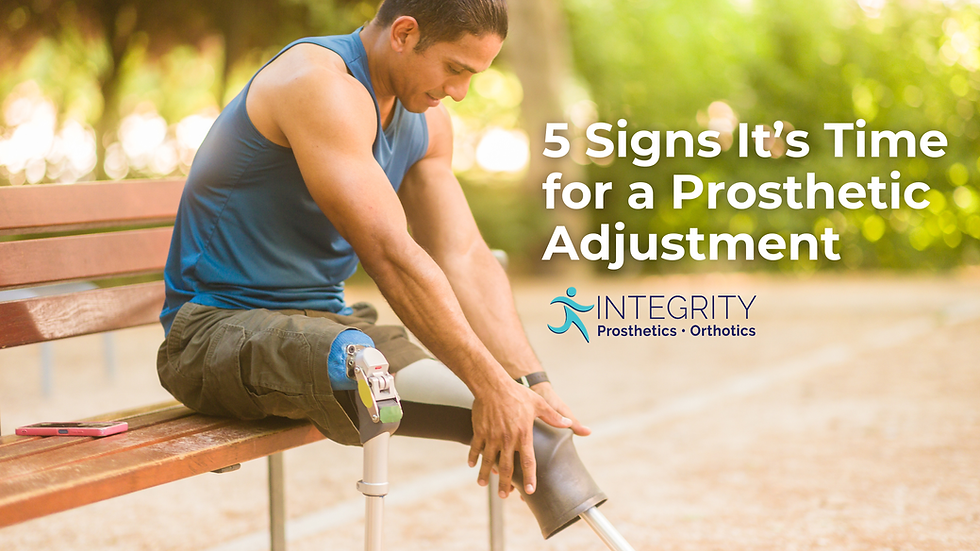
If you use a prosthetic device, you already know how much of a difference the right fit can make.
When everything feels aligned, movement is smoother, more comfortable, and more natural. But when something is off—even slightly—it can affect everything from how you walk to how you feel throughout the day.
The tricky part? Many people assume discomfort is just something they have to “push through.” You absolutely should not experience pain. In reality, your device should work with your body, not against it.
Here are five signs it may be time to schedule a prosthetic adjustment.
1. You’re Feeling New or Increased Discomfort ⚠️
A properly fitted prosthetic or orthotic device should feel supportive, not painful.
If you’re noticing:
Pressure in new areas
Soreness after short periods of use
Discomfort that’s getting worse over time
…it’s often a sign your fit has changed.
Even small shifts in your body can impact how your device sits and functions.
2. You Notice Skin Irritation or Redness 🔴
Your skin is one of the first places issues show up.
Keep an eye out for:
Red spots that don’t fade
Blisters or chafing
Areas of sensitivity or breakdown
While mild redness can be normal, persistent irritation is not—and it shouldn’t be ignored.
Addressing this early can prevent more serious complications and keep you comfortably mobile.
3. Your Movement Feels Different 🚶♂️
Have you noticed changes in how you walk or move?
This might look like:
A limp or uneven gait
Feeling off-balance
Needing to adjust your posture more than usual
These subtle changes can put extra strain on your joints and muscles over time.
A quick adjustment can often restore proper alignment and make movement feel natural again.
4. Your Body Has Changed (Even Slightly) 🔄
Your body is constantly changing—and your device should adapt with it.
Common factors that affect fit include:
Weight loss or gain
Muscle changes from increased activity
Swelling or fluid retention
Even small changes can lead to a noticeable difference in comfort and performance.
5. It’s Simply Been a While Since Your Last Check 🕒
Even if everything feels “fine,” regular check-ins are an important part of long-term prosthetic and orthotic care.
Routine adjustments help:
Catch small issues before they become bigger problems
Extend the life of your device
Keep you moving comfortably and confidently
If it’s been a while since your last visit, it may be time for a quick check.
Why Prosthetic Adjustments Matter More Than You Think 💡
Many patients wait longer than they should to come in, often because they assume discomfort is normal or temporary.
But the truth is:
The longer you wait, the more likely small issues turn into bigger ones.
Early adjustments are highly effective.
Care That Meets You Where You Are 🏡
At Integrity Prosthetics & Orthotics, we understand that getting to an appointment isn’t always easy.
That’s why we offer:
Personalized, patient-first care
Ongoing support and wellness checks
Mobile services and in-home visits for added convenience
Our goal is simple: to help you move comfortably, confidently, and without unnecessary pain.
📍 Don’t Wait Until It Gets Worse
If something feels off, even slightly, it’s worth getting it checked.
An adjustment today can make a big difference in how you feel tomorrow.
👉 Schedule your appointment with Integrity Prosthetics & Orthotics today and get back to moving with confidence.
Comments